

Harvest Timing · Trichomes
Sugar Leaf vs Calyx Trichomes: Where to Look Before You Chop
Sugar leaves amber early and trick growers into chopping too soon. Where to look instead, and how to sample a plant.
3 min read
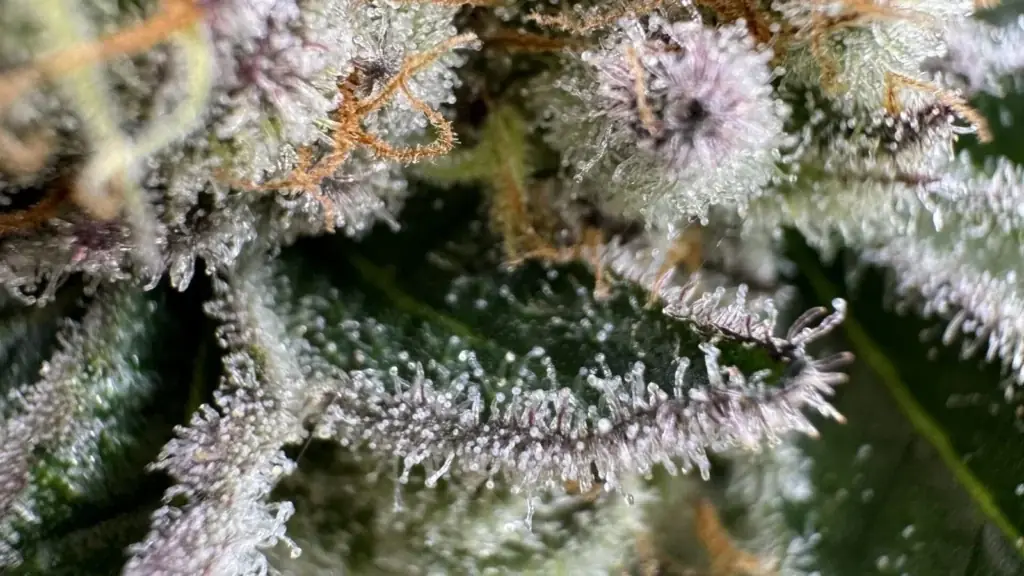
One of the most common harvest mistakes has nothing to do with knowing what amber looks like. It is about where you point the loupe. Look at the sugar leaves and you will often see more amber than the bud really has, and chop days early.
Calyx and sugar leaf: what they are
Calyxes (botanically, bracts) are the small swollen pods that make up the bud, each wrapped around a pistil. They are covered in the large stalked trichomes that hold most of the resin.
Sugar leaves are the small leaves that grow out between the calyxes. They get their name from the frost on them, and they are what you trim off after harvest.
| Calyx (bract) | Sugar leaf | |
|---|---|---|
| Where | The swollen pods that make up the bud | Small leaves poking out between the calyxes |
| Trichomes | Dense large stalked glands | More exposed, often fewer large glands |
| Ambers | At the plant’s real pace | Often days earlier |
| Use it for | The harvest decision | An early warning only |
Why sugar leaves mislead you
Sugar leaves stick out of the bud. They take more direct light, more heat, and more contact with hands and tools. Growers widely report that their trichomes amber earlier than the ones tucked between the calyxes.
There is also a difference in what grows there. When researchers studied trichome development, they worked on bracts because that is where the dense stalked trichomes are; on the leaves they looked at, the large stalked-capitate glands were missing.[1] The stalked trichomes are the ones that end up in your jar, so their colour is the one that counts.[2]
How to sample a plant properly
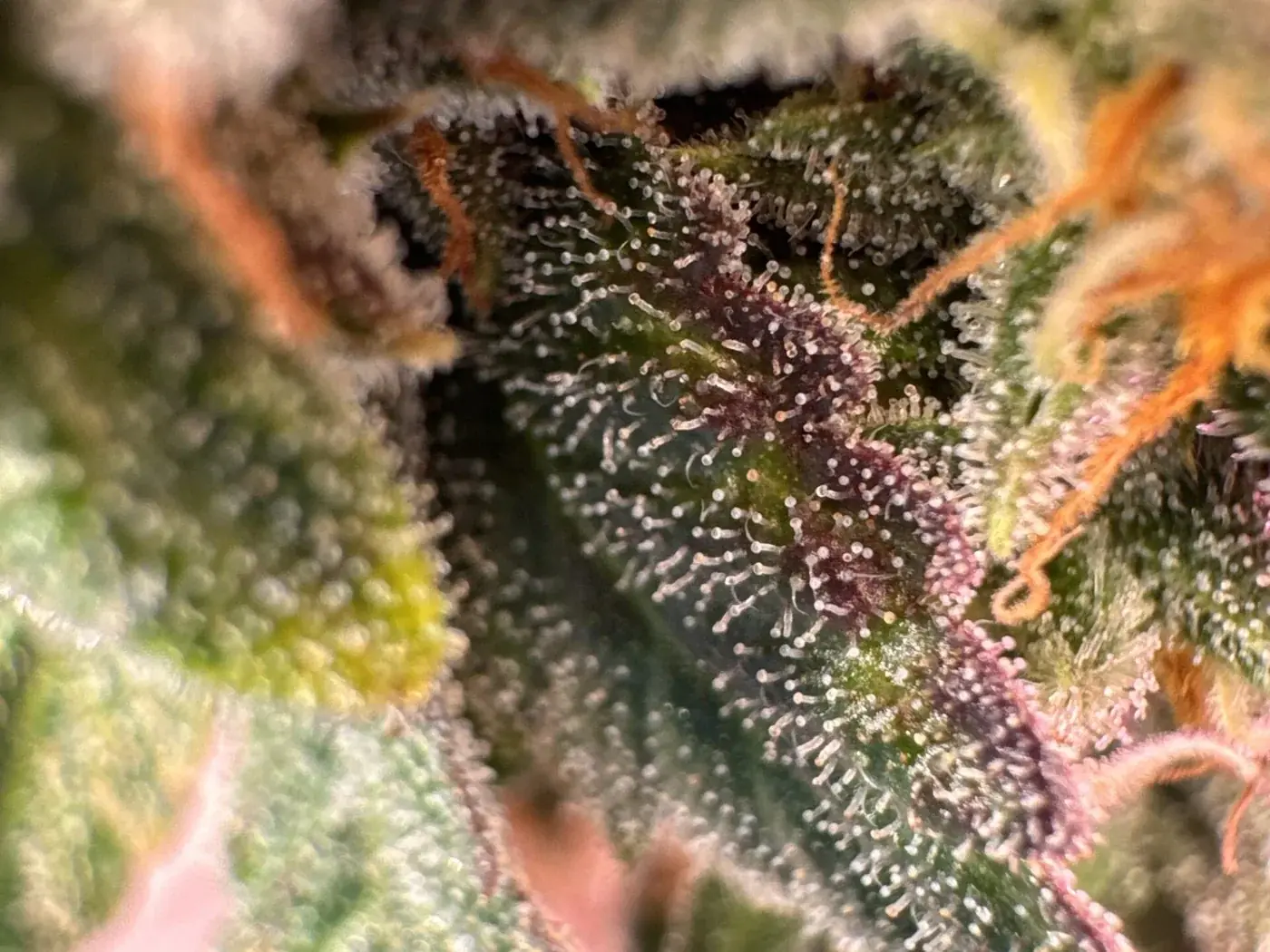
- Choose three buds: top, middle and bottom. Upper buds get more light and usually finish first.
- Find the calyxes: gently spread the sugar leaves if they are in the way.
- Look at the side of the calyx, not the very tip, where heads get knocked off more easily.
- Estimate the split of clear, cloudy and amber on about 20 heads.
- Note the numbers for each bud. If top and bottom disagree a lot, consider harvesting in two passes.
When sugar leaves are still useful
They are not useless. Because they move first, sugar leaves turning amber is a decent early warning that the calyxes are getting close. Use them as a reminder to start checking more often, not as the final call.
Reading the calyx in a photo
If you photograph your buds to track them, frame the shot on calyxes with as few leaf edges as possible. Any reading, by eye or by software like GrowBotiq Lab, only describes what is in the frame: fill it with sugar leaves and you are measuring sugar leaves. See how to photograph trichomes with your phone for the full routine.
For what the colours mean, start with our trichome chart.
References
- Punja, Z. K., Sutton, D. B., & Kim, T. (2023). Glandular trichome development, morphology, and maturation are influenced by plant age and genotype in high THC-containing cannabis (Cannabis sativa L.) inflorescences. Journal of Cannabis Research, 5, 12. doi:10.1186/s42238-023-00178-9
- Livingston, S. J., et al. (2020). Cannabis glandular trichomes alter morphology and metabolite content during flower maturation. The Plant Journal, 101(1), 37–56. doi:10.1111/tpj.14516