

Harvest Timing · Trichomes
Trichome Chart: The Harvest Stages at a Glance
Clear, cloudy and amber on one page, plus which trichomes to look at and how to use the chart at the plant.
2 min read
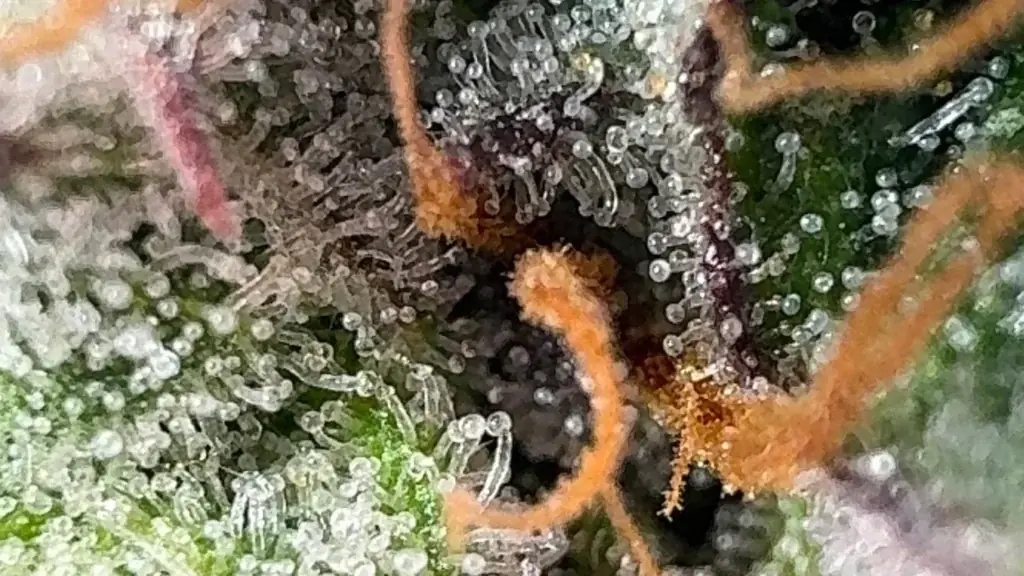
A good trichome chart is short. Three stages, what each one looks like, and what it means for the harvest. Here it is, followed by the details that make it actually work when you are standing at the plant.
| Stage | What you see | What it means |
|---|---|---|
| Clear | Glassy, see-through heads | Still building resin. Too early. |
| Cloudy | Milky, opaque white heads | Around peak cannabinoid content. The harvest window. |
| Amber | Golden to brown heads | Heads ageing. A little is normal, a lot means late. |
The three stages
Clear: too early
Glassy, see-through heads, like tiny water droplets. The gland is still building resin. Harvesting here means less weight and lower potency. More in clear trichomes: how long until harvest.
Cloudy: the window
Milky, opaque white heads. This is the stage growers associate with the highest cannabinoid content and the one most harvests are timed around.
Amber: late
Golden to brown heads. Researchers following trichomes through flowering saw many heads turn brown by week 8, together with signs of ageing and collapse.[1] A little amber is normal and often wanted; a lot of it means you are past the peak. The trade-off is covered in cloudy vs amber trichomes.
Which trichomes the chart is about
Cannabis flowers carry three types of glandular trichome:[2]
- Bulbous: the smallest, barely visible even under a loupe.
- Sessile: a head sitting almost directly on the surface.
- Stalked: a head on a tall stalk, like a mushroom. These are the big producers.
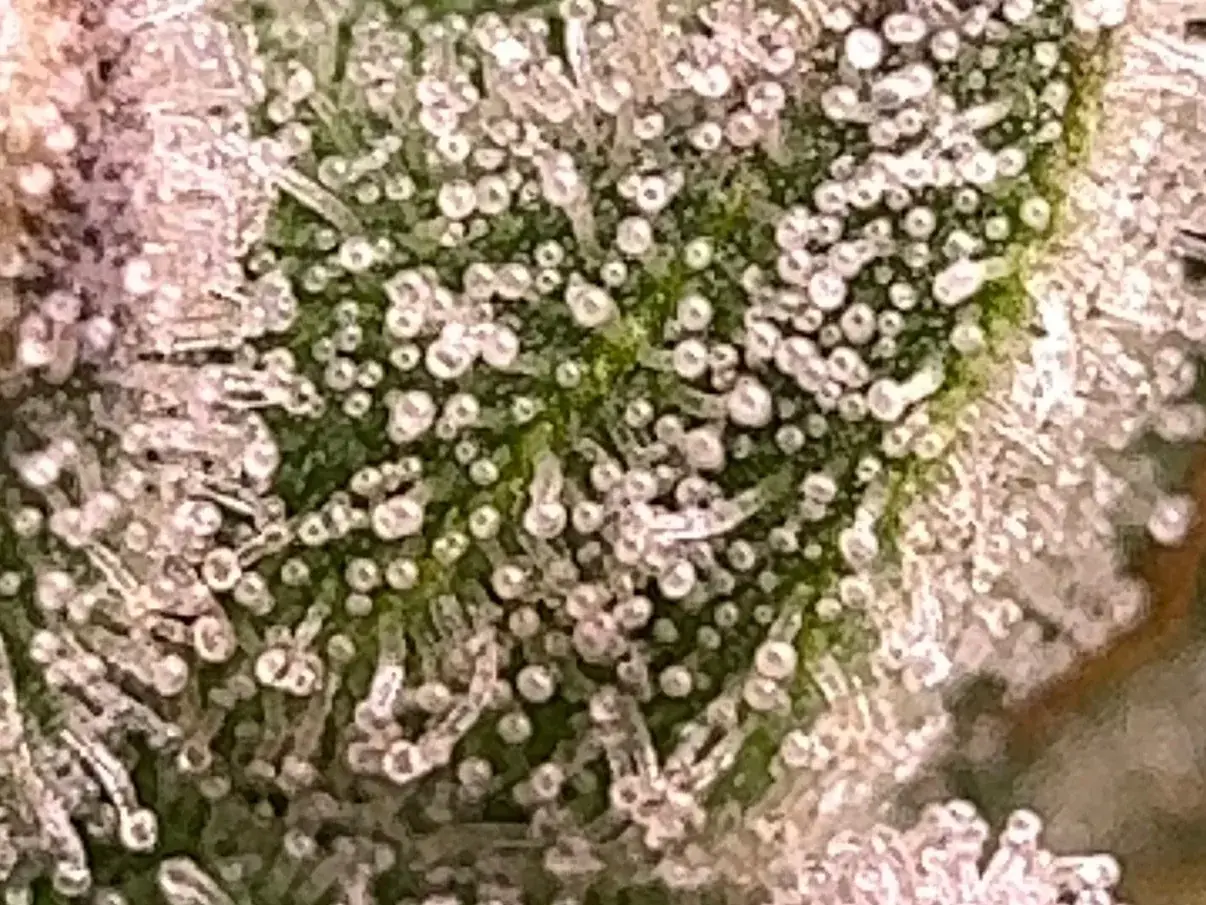
The chart is about the stalked ones. Researchers at the University of British Columbia found that stalked trichomes have larger secretory discs and produce more cannabinoids and terpenes than sessile ones, and that sessile trichomes seem to be an earlier stage of the same gland.[2] When you judge harvest, you are judging these.
How to use the chart at the plant
- Pick three buds: one high, one in the middle, one low.
- Look at the calyxes, not the small sugar leaves. Leaves amber early and mislead you.
- Use 30× or more. Below that, clear and cloudy look the same.
- Use white light. Warm or purple grow lights shift every colour.
- Estimate the split: out of about 20 heads, how many of each colour?
- Repeat every 2–3 days in the last two weeks and note the numbers.
Where charts fall short
A chart shows three clean stages; a real bud shows all three at once, in different proportions on different parts of the plant. That is why the decision is always a ratio, and why the trend over several days says more than one look.
If you want the ratio counted for you, GrowBotiq Lab reads clear, cloudy and amber from a macro photo on your iPhone and keeps the history per plant. Our guide on photographing trichomes with your phone helps you get a photo sharp enough to read.
References
- Punja, Z. K., Sutton, D. B., & Kim, T. (2023). Glandular trichome development, morphology, and maturation are influenced by plant age and genotype in high THC-containing cannabis (Cannabis sativa L.) inflorescences. Journal of Cannabis Research, 5, 12. doi:10.1186/s42238-023-00178-9
- Livingston, S. J., et al. (2020). Cannabis glandular trichomes alter morphology and metabolite content during flower maturation. The Plant Journal, 101(1), 37–56. doi:10.1111/tpj.14516