

Harvest Timing · Trichomes
Cloudy vs Amber Trichomes: What the Ratio Means for Your Harvest
What each colour tells you, the ratios growers actually use, and how to read them without fooling yourself.
5 min read
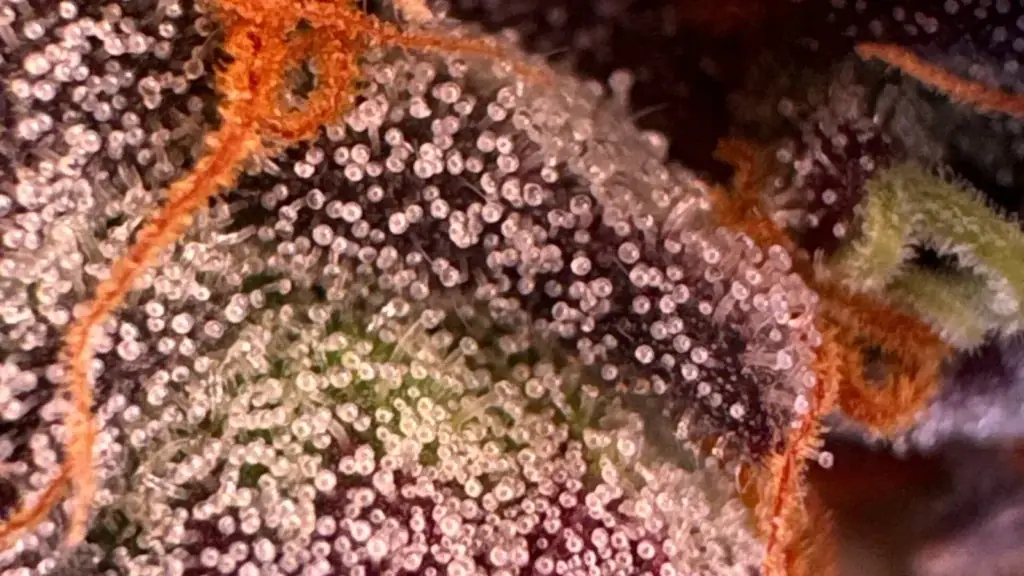
Every grower ends up in the same place at the end of flower: loupe in hand, squinting at a bud, trying to decide if those heads look more milky or more orange. The colour of the trichomes is the best signal you have for timing the harvest. It is also easy to misread.
This guide covers what cloudy and amber actually mean, the ratios growers use to call the chop, and the mistakes that make a reading useless.
What cloudy and amber actually mean
The trichomes that matter for harvest are the large stalked glands on the calyxes. Each one is a stalk with a resin head on top, and the head is where THCA and most of the terpenes are made and stored.[1]
Clear heads are glassy and see-through. The gland is still filling.
Cloudy heads turn milky and opaque. This is the stage growers associate with the highest cannabinoid content, and it is where most harvest windows open.
Amber heads go golden, then brown. In a 2023 study that followed heads through flowering, a large share of them had visibly browned by week 8, and the browning went together with the heads ageing and collapsing.[2] The same paper notes that growers read amber-brown as a sign of over-maturity and falling THC.
| Stage | What you see | What it means |
|---|---|---|
| Clear | Glassy, see-through heads | Still building resin. Too early. |
| Cloudy | Milky, opaque white heads | Around peak cannabinoid content. The harvest window. |
| Amber | Golden to brown heads | Heads ageing. A little is normal, a lot means late. |
The ratios growers use
Nobody harvests at 100% of anything. A bud always has a mix, so the decision comes down to a ratio. These are the three targets you will see most often:
- Early: mostly cloudy, a few clear, almost no amber. Chosen by growers who want a brighter, more uplifting result.
- Balanced: mostly cloudy with roughly 10–20% amber. The most common target.
- Late: 30% amber or more. Chosen for a heavier, more body-focused effect, at the cost of some potency.
| Target | Clear | Cloudy | Amber | Usually chosen for |
|---|---|---|---|---|
| Early | ~10% | ~85% | ~5% | Brighter, more uplifting |
| Balanced | 0–5% | ~80% | 10–20% | The most common target |
| Late | 0% | ~60% | 30%+ | Heavier, body-focused |
Be honest with yourself about what these numbers are. They are conventions that work, passed between growers, and there is very little controlled research tying a given amber percentage to a given effect. What they are really good for is consistency: if you liked a harvest at 15% amber, aiming for 15% next time is the most reliable way to get it again.
How to read the ratio without fooling yourself
Look at calyxes, not sugar leaves
The small leaves sticking out of the bud are more exposed to light and handling, and their trichomes often go amber days before the ones on the calyxes. If you judge by the leaves, you will chop early. We explain the difference in sugar leaf vs calyx trichomes.
Sample more than one bud
Top colas get the most light and usually finish first. Check one bud at the top, one in the middle and one lower down. If they disagree, the middle one is the fairest picture of the plant.
Count, don’t glance
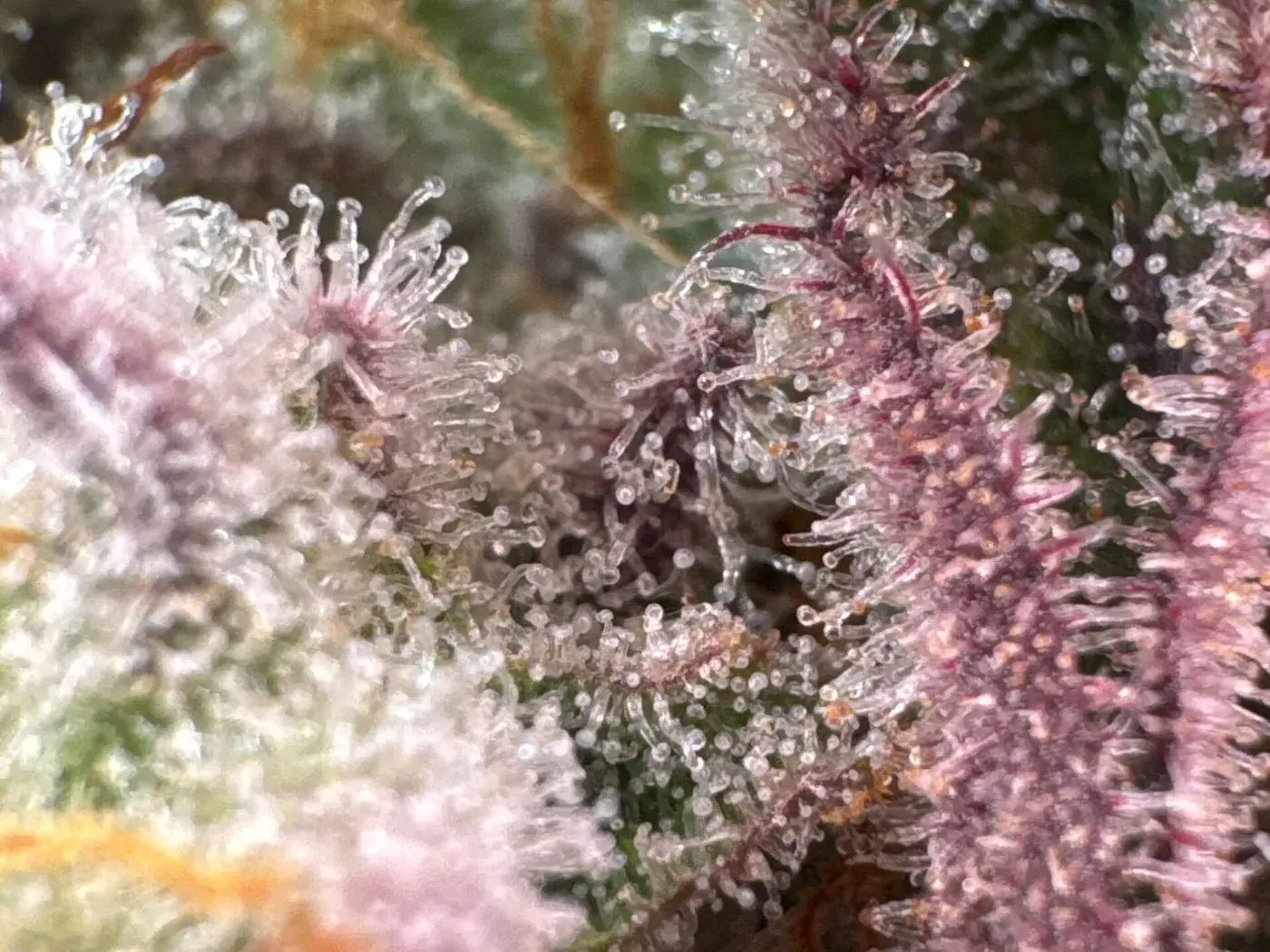
Under magnification, pick one small area and roughly count: out of 20 heads, how many are clear, cloudy, amber? A quick glance tends to overestimate amber, because the orange heads catch the eye.
Use the same light every time
Warm grow lights make everything look more amber than it is. Check under daylight or a neutral white light, and use the same one each time.
How fast the ratio moves
Amber does not appear overnight, but once it starts it moves faster than most people expect. Going from a few amber heads to 20% can take about a week in a warm room. That is why it pays to check every two to three days once you see the first amber, instead of once a week.
Temperature, light intensity and genetics all change the pace, so a strain that took nine weeks last time may not follow the same calendar in a hotter summer.
Track it instead of guessing
The most useful thing you can do is write the ratio down each time you check. A short series, say every two or three days over the last two weeks, shows you the trend, and the trend is what tells you when to chop.
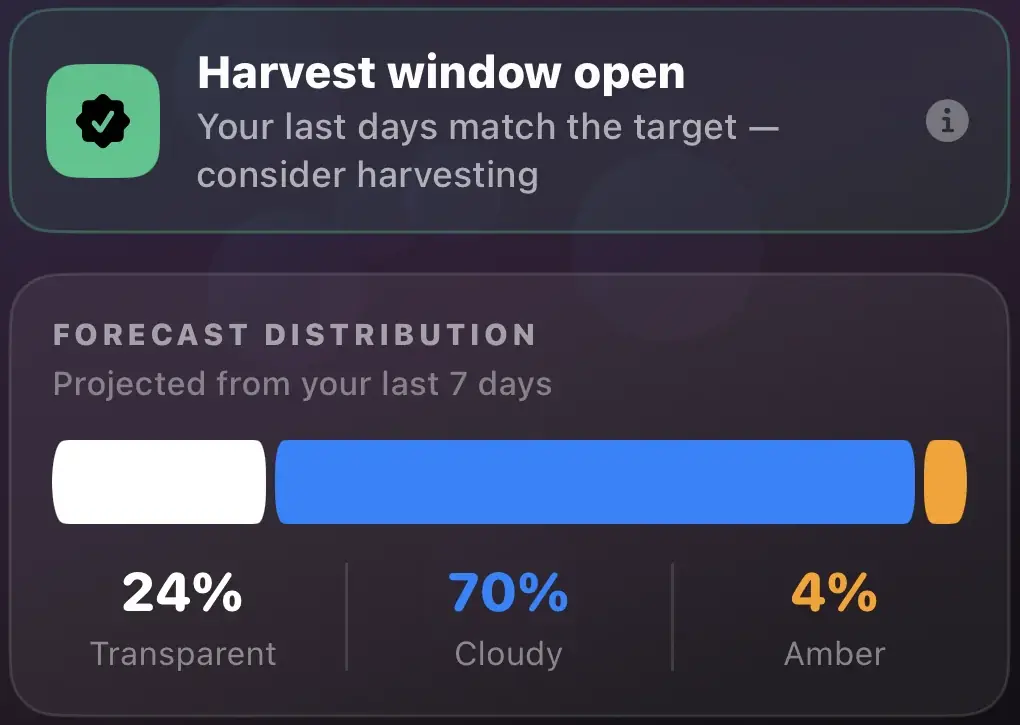
That is what we built GrowBotiq Lab for. You take a macro photo, the app counts clear, cloudy and amber heads on the iPhone itself, and saves the split to the plant, so the trend builds up on its own.
Quick answers
Is it better to harvest at cloudy or amber?
Most growers harvest when the trichomes are mostly cloudy with some amber. All cloudy gives a lighter effect; a lot of amber gives a heavier one. Pick the style you want and stay consistent.
Does amber mean more CBN?
THC does break down towards CBN over time, mostly after harvest during storage.[3] On a living plant over a few extra days the amount is small. The heavier feel of late harvests is real for many people, but it is not only a CBN story.
My trichomes are amber but the pistils are white. What now?
Check that you are looking at calyxes and not sugar leaves. If the calyx heads are really amber, trust the trichomes over the pistils. Pistils react to stress and handling and are a weaker signal. More on that in pistils vs trichomes.
References
- Livingston, S. J., et al. (2020). Cannabis glandular trichomes alter morphology and metabolite content during flower maturation. The Plant Journal, 101(1), 37–56. doi:10.1111/tpj.14516
- Punja, Z. K., Sutton, D. B., & Kim, T. (2023). Glandular trichome development, morphology, and maturation are influenced by plant age and genotype in high THC-containing cannabis (Cannabis sativa L.) inflorescences. Journal of Cannabis Research, 5, 12. doi:10.1186/s42238-023-00178-9
- Zamengo, L., et al. (2019). The role of time and storage conditions on the composition of hashish and marijuana samples: a four-year study. Forensic Science International, 298, 131–137. doi:10.1016/j.forsciint.2019.02.058