

Harvest Timing
Autoflower Harvest Time: How to Know When Your Auto Is Ready
Typical seed-to-harvest times, why the breeder’s calendar is only a guide, and how to read the trichomes on an auto.
3 min read
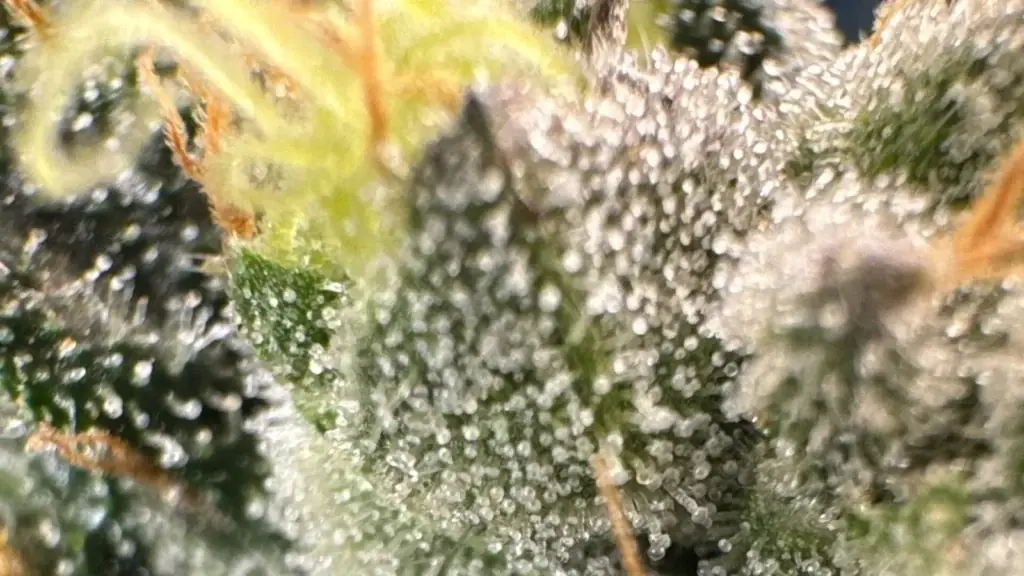
Autoflowers are sold on speed. The pack says 9 or 10 weeks from seed, and it is tempting to put the date in your calendar and chop on the day. Sometimes that works. Often the plant is either a week early or a week late, and the only way to know is the same as with any cannabis plant: look at the trichomes.
What makes an autoflower different
Most cannabis is short-day: it flowers when nights get long, so indoors you trigger flowering by switching to 12 hours of light. Autoflowers ignore that. They start flowering on their own after a few weeks of growth, whatever the light schedule.
This trait has been traced to genetics. A 2022 study mapped a locus called Autoflower1 on chromosome 1 that behaves as a simple recessive trait: plants need two copies to flower without long nights.[1]
In practice it means one thing for harvest: you cannot stretch the vegetative phase to buy time, and the plant follows its own clock.
| Autoflower | Photoperiod | |
|---|---|---|
| Starts flowering | By age, after a few weeks | When nights get long (12/12 indoors) |
| Vegetative phase | Fixed, about 2–4 weeks | As long as you want |
| Seed to harvest | Commonly 8–12 weeks | Often 4–6 months |
| Harvest decision | Same for both: read the trichomes on the calyxes | |
Typical timing
- Seedling: about 1–2 weeks.
- Growth before flowering: about 2–4 weeks.
- Flowering: about 6–8 weeks.
- Total: commonly 8–12 weeks from germination, longer for sativa-leaning autos.
Use the breeder’s number as the moment to start checking, not the moment to cut. Light hours, temperature, pot size and stress all move it.
Reading trichomes on an auto
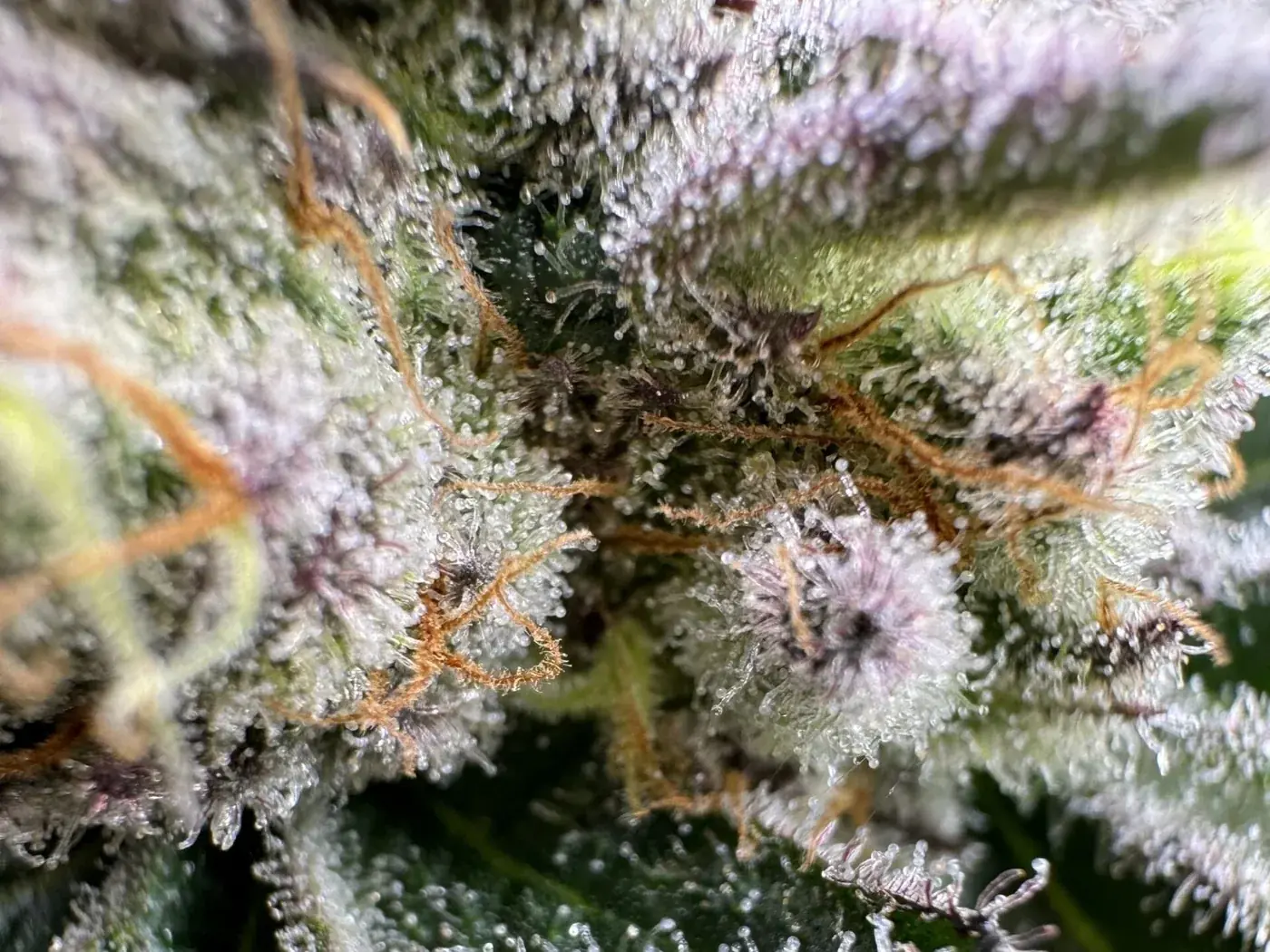
Trichomes on an autoflower go through the same stages: clear, cloudy, amber. The same rules apply.
- Start checking around two weeks before the breeder’s date.
- Look at calyxes, not sugar leaves. Autos are small and buds are close to the light, so sugar leaves can amber fast. See why that matters.
- Check top and bottom. On small plants the gap is smaller, but lower buds still lag.
- Chop on the ratio you want. Mostly cloudy with 10–20% amber is the usual balanced target. More in cloudy vs amber trichomes.
Autoflower-specific mistakes
Chopping on the calendar
The most common one. A stressed seedling or a cold week can add a week or more. If the trichomes are mostly clear, the plant is not done, whatever the pack says.
Waiting too long
The opposite problem. Autos have a short life and some decline fast at the end: if leaves are dying off and heads are going amber quickly, don’t wait for a perfect number.
Stressing the plant late to “finish” it
Autos recover poorly from stress. Heavy defoliation or cutting water in the last weeks can make the plant look done without making it more mature.
Keep a simple record
Because autos finish fast, the last two weeks go by quickly. A photo every two or three days of the same bud, with a rough clear, cloudy and amber split, is enough to see the trend. GrowBotiq Lab counts the split from the photo and keeps it per plant, which is handy when several autos are finishing at different speeds. To get a usable photo, see how to photograph trichomes with your phone.
References
- Toth, J. A., Stack, G. M., Carlson, C. H., & Smart, L. B. (2022). Identification and mapping of major-effect flowering time loci Autoflower1 and Early1 in Cannabis sativa L. Frontiers in Plant Science, 13, 991680. doi:10.3389/fpls.2022.991680