

Trichomes
What Magnification Do You Need to Check Trichomes?
Loupe, clip-on lens or digital microscope: what each one shows, and the minimum you need to tell clear from cloudy.
3 min read
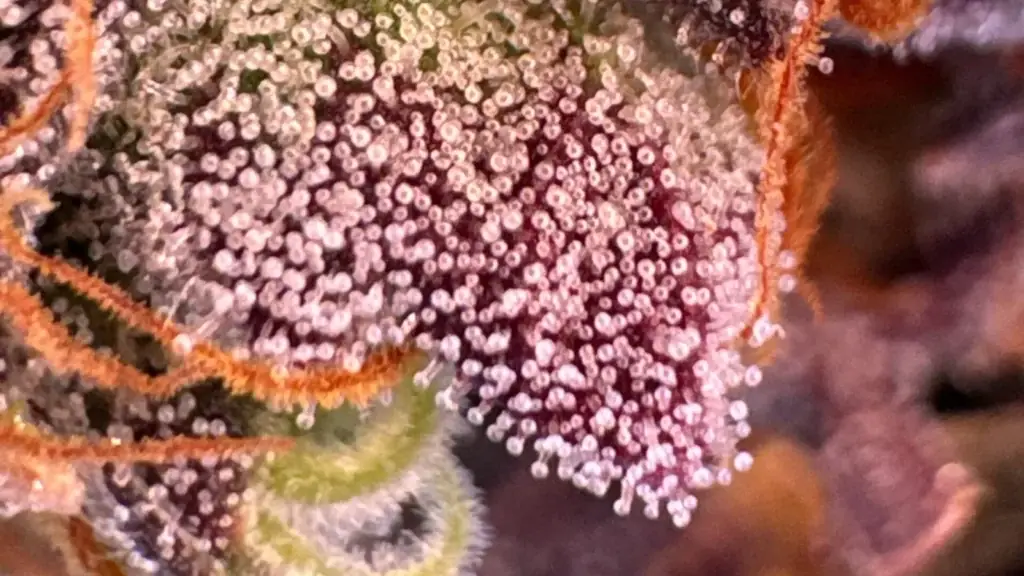
You cannot judge trichomes with the naked eye. The heads you care about are tiny, and at low magnification clear and cloudy look the same. The good news is that the tools you need are cheap. The question is which one, and how much zoom is enough.
How small trichomes really are
The resin head of a glandular trichome is roughly 40 to 110 micrometres across, and stalks on stalked trichomes measured around 300 to 500 µm in one study, with some reaching 1 mm.[1] A 100 µm head is a tenth of a millimetre, about the thickness of a sheet of paper.
At 30×, that head appears about 3 mm wide. At 60×, about 6 mm. That is roughly where the colour of each head becomes readable instead of guessed.
The minimum: 30×, better 60×
- 10–20×: you can see that trichomes are there and spot obvious amber. Not enough to tell clear from cloudy.
- 30×: the minimum for a real reading, if your hands are steady.
- 60× and up: individual heads are easy to read. This is the comfortable range.
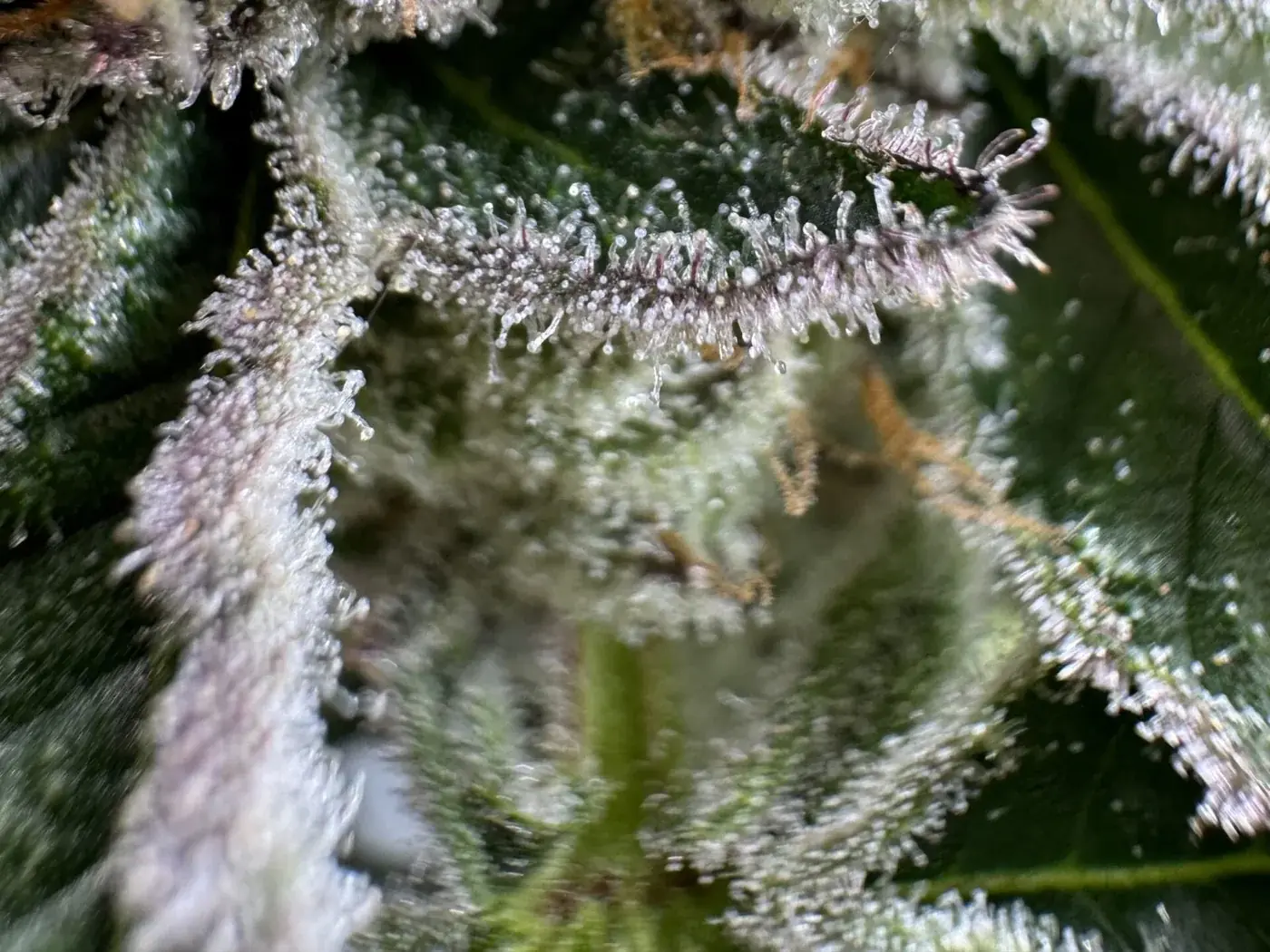
The three tools compared
Jeweller’s loupe (30–60×)
Cheap, small, no batteries. Perfect for a quick look in the grow room. The catch: the field of view is tiny, you need to hold the loupe close to your eye and the bud steady, and you cannot easily take a photo through it. Fine for a quick check, weak for tracking.
Clip-on phone macro lens (15–30× plus phone zoom)
A small lens that clips over your phone camera. Combined with the phone’s own zoom, it gets you into the readable range and, most importantly, gives you a photo. Photos can be compared day to day, zoomed later and counted. For tracking a harvest, this is the most practical option.
Digital or USB microscope (50–200×+)
The clearest view of individual heads. The downside is that most models work best on a cut sample on a table, not on a living plant in a tent. Great for learning what the stages look like; slower for daily checks.
| Loupe | Clip-on lens | Digital microscope | |
|---|---|---|---|
| Typical magnification | 30–60× | 15–30× + zoom | 50–200×+ |
| Works on the live plant | Yes | Yes | Sometimes |
| Takes photos | No | Yes | Yes |
| Best for | Quick checks | Tracking over time | Close study |
Mistakes that make any tool useless
- Bad light. Grow lights shift colours. Use daylight or a white torch from the side.
- Shaky hands. Brace your hand or phone against the pot or the stem.
- Wrong spot. Look at the calyxes, not the sugar leaves. More in sugar leaf vs calyx trichomes.
- Too much zoom, no focus. 200× out of focus is worse than 30× in focus.
Our pick
Start with a cheap clip-on macro lens for your phone. It gives you enough magnification and, unlike a loupe, a record. Then read the photo by eye with our trichome chart, or let GrowBotiq Lab count clear, cloudy and amber for you. Our guide on photographing trichomes with your phone covers the technique.
References
- Punja, Z. K., Sutton, D. B., & Kim, T. (2023). Glandular trichome development, morphology, and maturation are influenced by plant age and genotype in high THC-containing cannabis (Cannabis sativa L.) inflorescences. Journal of Cannabis Research, 5, 12. doi:10.1186/s42238-023-00178-9
- Livingston, S. J., et al. (2020). Cannabis glandular trichomes alter morphology and metabolite content during flower maturation. The Plant Journal, 101(1), 37–56. doi:10.1111/tpj.14516